

In today’s digital-first economy, a website is no longer just an online brochure. It is your salesperson, support agent, marketing engine, and brand ambassador—working 24/7. Yet, many businesses still rely on traditional, static websites that fail to adapt to user behavior, market trends, or customer expectations.
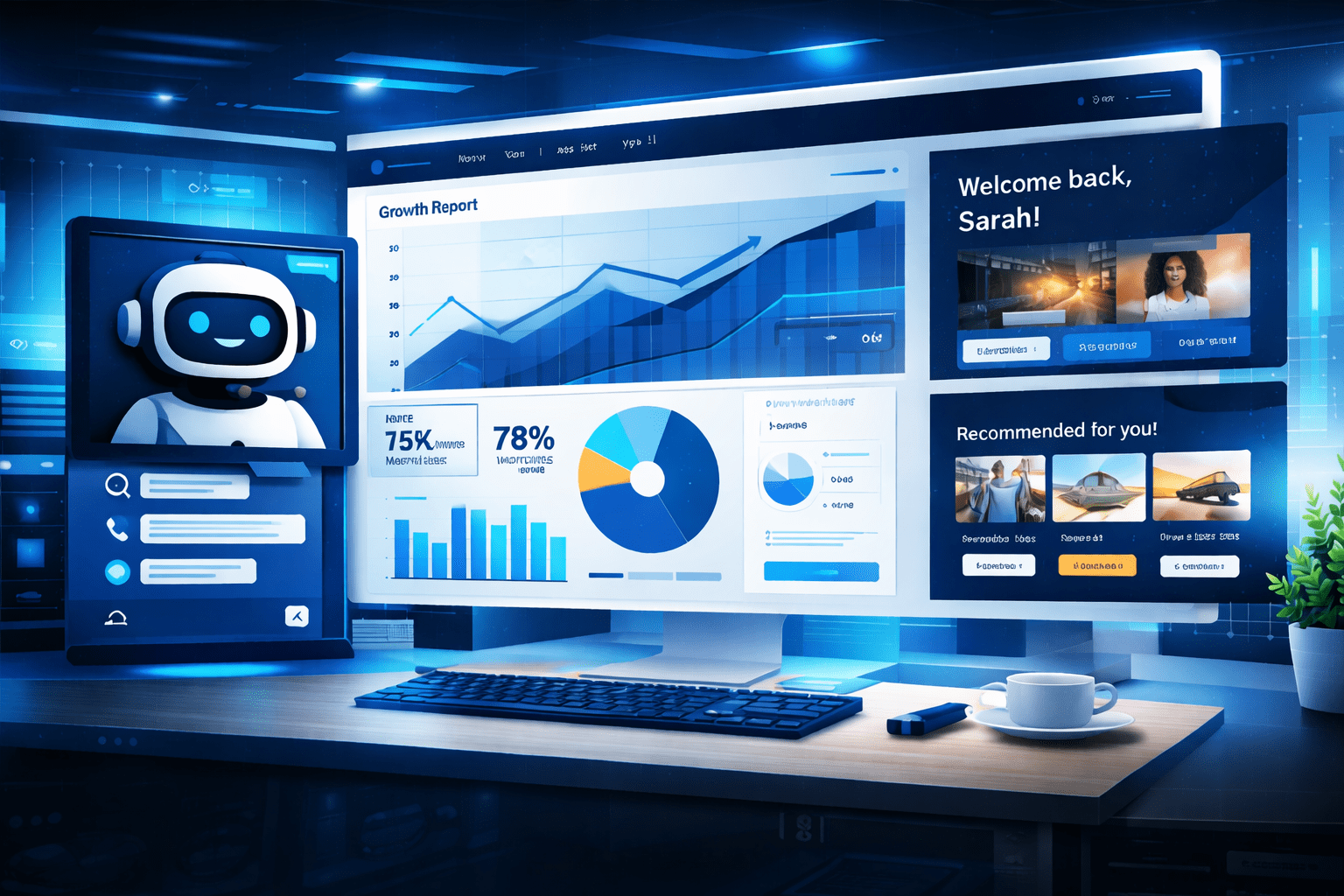
Artificial Intelligence (AI) is transforming how websites operate, interact, and convert visitors into customers. From personalized content and intelligent chatbots to predictive analytics and automated marketing, AI-powered websites are redefining business growth.
Whether you’re a startup, SME, or enterprise, one thing is clear:
👉 Businesses that adopt AI-powered websites gain a competitive advantage—those that don’t risk falling behind.
This article explains why every business needs an AI-powered website, how it works, real-world benefits, and what the future holds.
What Is an AI-Powered Website?
An AI-powered website uses artificial intelligence technologies to analyze data, learn from user behavior, and automatically improve user experience, performance, and conversions.
Unlike traditional websites that behave the same way for every visitor, AI-powered websites are:
- Dynamic
- Personalized
- Data-driven
- Self-optimizing
Core AI Technologies Behind Smart Websites
- Machine Learning (ML) – Learns from user behavior
- Natural Language Processing (NLP) – Understands text and speech
- Predictive Analytics – Forecasts user actions
- Generative AI – Creates content, text, and recommendations
- Computer Vision – Image and pattern recognition (used in UX & security)
The Business Problem with Traditional Websites
Before understanding why AI is essential, let’s look at common issues businesses face with conventional websites:
- Same content for every visitor
- High bounce rates
- Low conversion rates
- Manual customer support
- Slow response to customer queries
- No real-time optimization
- Poor lead qualification
- Limited insights into user behavior
AI directly solves these problems.
1. AI Delivers Personalized User Experiences
Why Personalization Matters
Modern customers expect relevant experiences, not generic ones. According to studies, personalized experiences significantly increase engagement and conversions.
How AI Personalization Works
AI analyzes:
- User location
- Device type
- Browsing behavior
- Past interactions
- Purchase history
Based on this data, the website can:
- Show personalized content
- Recommend relevant products or services
- Display dynamic CTAs
- Adjust layouts and messaging
📈 Business Impact:
- Higher engagement
- Lower bounce rates
- Improved conversions
- Better customer satisfaction
2. AI-Powered Chatbots Provide 24/7 Customer Support
Customer support is critical—but also expensive and resource-heavy.
What AI Chatbots Can Do
- Answer FAQs instantly
- Handle bookings and inquiries
- Capture and qualify leads
- Provide order or service updates
- Escalate complex issues to humans
Unlike human agents, AI chatbots:
- Never sleep
- Handle unlimited users
- Respond instantly
- Learn continuously
💡 Result: Better customer experience without increasing support costs.
3. AI Improves Website Conversions Automatically
AI-powered websites continuously test and optimize themselves.
Conversion Optimization with AI
AI can:
- Analyze visitor behavior
- Identify drop-off points
- Optimize CTAs
- Adjust layouts automatically
- Recommend best-performing designs
This replaces manual A/B testing with real-time intelligent optimization.
📊 Outcome:
- More leads
- Higher sales
- Better ROI on traffic
4. AI Enhances SEO and Search Visibility
Search engines prioritize:
- User experience
- Content relevance
- Engagement metrics
- Page performance
AI helps websites align perfectly with these factors.
AI for SEO Includes:
- Keyword research and clustering
- Search intent analysis
- Content optimization
- Meta title and description generation
- Internal linking suggestions
- Voice search optimization
🚀 Result: Higher rankings, more organic traffic, and sustained visibility.
5. AI Enables Smarter Content Creation
Content is the backbone of digital marketing—but creating high-quality content consistently is challenging.
How AI Helps with Content
- Blog drafting and topic ideation
- Product descriptions
- Landing page copy
- FAQs and knowledge bases
- Content rewriting and localization
AI does not replace human creativity—it enhances productivity and consistency.
📝 Business Benefit: Faster content production without sacrificing quality.
6. AI-Driven Analytics Provide Actionable Insights
Traditional analytics show what happened.
AI analytics show why it happened and what will happen next.
AI Analytics Capabilities
- Predict user behavior
- Identify high-intent visitors
- Detect conversion blockers
- Forecast sales and demand
- Measure campaign effectiveness
📉➡📈 Impact: Smarter decisions, not guesswork.
7. AI Strengthens Website Security
Cyber threats are increasing every year, and businesses are frequent targets.
AI in Website Security
- Detects unusual behavior
- Prevents brute-force attacks
- Filters spam and bots
- Identifies malware patterns
- Protects user data
🔐 AI security systems learn continuously, making them more effective over time.
8. AI Automates Marketing and Sales Processes
AI-powered websites integrate seamlessly with CRM and marketing tools.
Automation Use Cases
- Lead scoring
- Email marketing personalization
- Abandoned cart recovery
- Upselling and cross-selling
- Campaign optimization
💼 Business Advantage: Scalable growth without increasing manpower.
9. AI Improves Website Speed and Performance
AI optimizes:
- Image loading
- Caching strategies
- Content delivery
- Resource allocation
Faster websites mean:
- Better user experience
- Higher SEO rankings
- Increased conversions
⚡ Speed is no longer optional—it’s a competitive necessity.
10. AI Makes Websites Accessible and Inclusive
AI helps businesses meet accessibility standards by:
- Providing voice navigation
- Text-to-speech features
- Smart contrast adjustments
- Language translation
- Adaptive UI for disabilities
🌍 Result: Broader reach and better compliance.
Real-World Business Use Cases
E-Commerce
- Personalized product recommendations
- Dynamic pricing
- Cart abandonment recovery
Service Businesses
- Automated bookings
- Lead qualification
- AI-powered consultations
SaaS Companies
- Intelligent onboarding
- Usage-based personalization
- Predictive churn analysis
Enterprises
- Data-driven decision-making
- Customer behavior forecasting
- Advanced security monitoring
Common Myths About AI-Powered Websites
❌ “AI Is Only for Big Companies”
✔ AI tools are now affordable and scalable for all businesses.
❌ “AI Replaces Humans”
✔ AI supports teams—it doesn’t replace strategic thinking.
❌ “AI Websites Are Too Complex”
✔ Modern platforms integrate AI seamlessly with minimal setup.
Challenges & Responsible Use of AI
While AI is powerful, it must be used responsibly.
Challenges
- Data privacy concerns
- Over-automation risks
- Content originality
- Ethical AI usage
Best Practices
- Combine AI with human oversight
- Be transparent with users
- Focus on value, not automation alone
- Follow data protection regulations
The Future of AI-Powered Websites
The future is not static—it’s intelligent.
Upcoming trends include:
- Voice-first websites
- Predictive personalization
- Emotion-aware interfaces
- AI-driven no-code development
- Hyper-personalized user journeys
Businesses adopting AI today are future-proofing their digital presence.
Why Your Business Should Act Now
Delaying AI adoption means:
- Losing competitive advantage
- Higher customer acquisition costs
- Lower engagement
- Missed growth opportunities
Early adopters benefit from:
- Faster growth
- Better customer relationships
- Data-driven scalability
Conclusion: AI Is No Longer Optional
An AI-powered website is not a luxury—it’s a strategic business asset.
It improves:
- Customer experience
- Operational efficiency
- Marketing performance
- Sales conversions
- Long-term scalability
In a competitive digital world, businesses that embrace AI-powered websites will lead—others will follow or fade.